A lot of exterior cleaning mistakes start with a simple assumption: if a surface looks dirty, hit it with more pressure.
That sounds practical right up until the roof loses granules, the siding gets forced full of water, or the deck ends up looking fuzzier than it did before. The problem is not enthusiasm. The problem is using the wrong method on the wrong material.
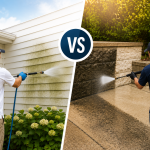
That is why this topic matters more than people think. Soft Washing vs Pressure Washing is not a contest between two cleaning styles. It is a surface-matching decision. One method is built for delicate materials and organic buildup. The other is built for tougher surfaces that can handle more force. Great Lakes Works describes the split clearly on its service pages: soft washing is suited to surfaces that need a gentler touch, while pressure washing is used to clean durable exterior materials without unnecessary damage.
For homeowners, property managers, and commercial property owners, the payoff is simple. When the method matches the surface, you get a cleaner property, better curb appeal, and less risk of expensive damage later. When the method does not match, the clean can be short-lived and the repair bill can hang around much longer.
Key Takeaways
- Soft washing is designed for delicate surfaces like roofs, siding, and wood.
- Pressure washing works best on durable surfaces like concrete, brick, and stone.
- Using the wrong method can lead to long-term damage, not just short-term results.
- The best approach often combines treatment, dwell time, and the right level of pressure.
Why This Question Matters Before Any Cleaning Starts
From the street, grime looks like grime. Up close, it is usually one of several different problems.
Sometimes it is organic growth like algae, mildew, moss, or mold. Sometimes it is built-up dirt and grime that has settled into concrete or brick. Sometimes it is staining, oxidation, or a weathered finish that reacts badly to aggressive rinsing. The surface matters just as much as the mess. A concrete driveway and an asphalt shingle roof may both look dirty, but they do not respond to cleaning the same way, and they definitely do not forgive mistakes the same way. Great Lakes Works specifically notes that pressure washing is appropriate for hard surfaces like concrete, brick, and stone, while soft washing is better for roofs, siding, and wood.
That is the first big mindset shift. The goal is not to choose the strongest method. The goal is to choose the safest effective method.
What Soft Washing Actually Is
Soft washing is a low-pressure cleaning approach that relies on cleaning solutions and dwell time to break down grime, kill organic growth, and rinse the surface clean without the brute force of high pressure. Great Lakes Works describes roof soft washing as a gentle cleaning method that combines low water pressure with specially formulated eco-friendly cleaning solutions, and its soft-washing page says the service is intended for surfaces that require a delicate touch, including roofs and siding.
This is where people sometimes underestimate soft washing. Because it uses less pressure, they assume it is less effective. In reality, it is often more effective on the surfaces that matter most because it addresses the actual cause of the ugly buildup. If the problem is algae, mildew, or other organic growth, blasting the surface may remove some of what you can see, but it does not always treat what is still rooted in or clinging to the surface. Soft washing is designed to handle that problem with chemistry and time, not force alone. The source material you provided makes that point clearly: dwell time matters, and the treatment stage changes how well the final rinse works.
In plain English, soft washing is usually the smarter move when the surface is valuable, finished, delicate, or easy to damage.
What Pressure Washing Actually Is
Pressure washing uses high-pressure water to remove dirt, grime, mud, stains, and buildup from surfaces that can safely tolerate more force. It is especially useful on durable materials where embedded grime needs to be lifted mechanically instead of mostly treated chemically. Great Lakes Works presents pressure washing as a method for restoring hard surfaces like concrete, brick, and stone, and positions it as part of its residential and commercial exterior cleaning services.
Pressure washing has its place, and it is a valuable one. A driveway with years of grime packed into the pores of concrete usually needs more than a gentle rinse. A sidewalk, masonry wall, or stone patio may respond extremely well to controlled pressure. That said, pressure washing is not just “water cleaning.” It still requires judgment. Nozzle choice, spray distance, angle, surface condition, and water direction all matter. A good result comes from controlled pressure, not reckless pressure.
The easiest mistake is assuming pressure washing is the universal answer because it looks dramatic. Sometimes the cleanest-looking method in a quick online clip is the worst choice for the actual surface.
The Real Difference Between The Two Methods
The simplest way to frame soft washing vs pressure washing is this:
Soft washing is treatment-first.
Pressure washing is force-first.
That difference sounds small, but it changes everything.
If the dirt is mostly living growth on a delicate surface, soft washing is usually the better fit because it treats the source and protects the material. If the grime is packed into a hardscape that can take more force, pressure washing usually makes more sense. Great Lakes Works’ service language reflects that exact distinction by separating delicate materials from hard surfaces in the way it describes each service.
The source material you shared adds another useful layer. In the demonstration, a stronger soft-wash treatment worked quickly on the test wall, a lighter downstream mix had less impact on the growth, and a higher-volume rinse became most effective after pretreatment. The takeaway was not that one system always wins. The takeaway was that each method has its place, and results depend on matching the right process to the job.
That is the heart of this topic.
Which Surfaces Usually Need Soft Washing?
Soft washing is usually the safer choice when the material can be damaged by too much force or when the staining is largely organic.
Roofs
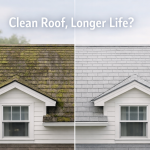
Roofs are one of the clearest soft-wash surfaces. Great Lakes Works says its roof-cleaning service uses a soft-washing approach with low-pressure water and biodegradable cleaning solutions to remove algae, moss, dirt, and mildew without compromising the roof’s integrity. Its roof-cleaning content also warns that high-pressure washing can damage shingles and strip protective coatings.
Siding
Vinyl siding, painted siding, and many finished exterior walls usually benefit from a gentler approach. Soft washing helps remove algae and film while reducing the risk of forcing water behind the siding or damaging the finish. Great Lakes Works includes siding among the surfaces suited to soft washing and emphasizes avoiding damage to delicate materials.
Painted Wood And Trim
Pressure can strip paint, rough up wood fibers, or leave visible wand marks. On painted wood, the safest clean is often the one that respects the finish first and worries about raw cleaning force second. Great Lakes Works lists wood among the materials better suited to soft washing.
Some Fences, Decks, And Specialty Finishes
These are the judgment surfaces. Age, finish, sun exposure, and condition matter. A newer sealed deck may respond differently than an older weathered one. A brittle fence does not need “more power.” It needs more care. This is where the most expensive DIY assumptions usually happen.
Which Surfaces Usually Need Pressure Washing?
Pressure washing shines on surfaces built to handle it.
Concrete Driveways And Sidewalks
Concrete often holds deeply embedded grime, tire marks, mud, and general weathering that respond well to controlled pressure. This is one of the most natural fits for pressure washing, and Great Lakes Works highlights concrete among the surfaces that benefit from it.
Brick And Stone
Brick and stone can often handle stronger cleaning than roofs or siding, though the condition of mortar and older masonry still matters. Great Lakes Works includes brick and stone in the hard-surface category for pressure washing.
Patios, Hardscape Edges, And Commercial Walk Areas
Where the goal is removing packed-in grime on a durable substrate, pressure washing is often the right tool. It is especially useful where appearance and safety overlap, such as entry areas, sidewalks, and heavily trafficked outdoor surfaces.
The key phrase here is “controlled pressure.” Even tough materials have weak points. A crumbling joint, aging mortar line, or cracked surface changes the equation.
What Happens When People Use The Wrong Method?
This is where the topic stops being theoretical.
Use too much pressure on the wrong roof and you may disturb granules, force water where it should not go, or shorten the life of the material. Use pressure on siding carelessly and you can drive water behind the panels, leave streaks, or scar the finish. Use the wrong settings on wood and it may look shredded instead of clean.
On the other side, using only a gentle rinse on a hard, heavily soiled concrete surface may not get you very far. The surface may still look tired because the method was not strong enough for the job.
The wrong choice usually fails in one of two ways. It either damages the material, or it wastes time while leaving the real problem behind.
Why Pressure Washing Can Damage Shingles
| Asphalt shingle roof case study
This is highly relevant because it directly supports the “which surface needs which method” angle. ARMA says to use a bleach-and-water treatment with a low-pressure rinse and warns never to use a pressure washer on asphalt shingles. That makes it a near-perfect fit for your roof section. Source: Asphalt Roofing Manufacturers Association (ARMA) |
A Simple Decision Framework Homeowners Can Actually Use
When you are deciding between the two methods, use this three-part test.
1. Start With The Material
Ask what the surface is made of. Is it delicate or durable? Is it finished, painted, sealed, porous, aging, or brittle? The material tells you how much force it can tolerate.
2. Identify The Buildup
Ask whether you are seeing organic growth, surface film, embedded dirt, or staining. If the mess is alive or treatment-based, soft washing usually rises to the top. If the grime is packed into a hard surface, pressure washing often makes more sense.
3. Choose The Gentlest Effective Method
This is the part people skip. They ask what can clean it fastest, not what can clean it safely. The better question is: what is the least aggressive method that can still get the result?
That mindset protects property longevity, not just appearance.
What Most People Get Wrong About “Clean”
A surface can look cleaner without truly being cleaned well.
That happens when visible growth is blasted off but not actually treated, when a stain is lightened without solving what caused it, or when a surface is cleaned at the cost of its finish. It is the exterior-cleaning version of stuffing clutter into a closet before guests arrive. From a distance, it looks handled. Up close, the problem just moved.
The source material you shared reinforces that point. The demonstration showed that pretreatment concentration and dwell time affected the result, and that rinse power worked best when the cleaning sequence matched the surface and buildup.
That is why the smartest cleaning jobs are rarely “spray and pray.” They are planned.
Why Safety Belongs In This Conversation
Pressure washing is useful, but it is not harmless. OSHA documents a case in which a worker cleaning with a high-pressure washer suffered a lacerated injection wound after 3,000-psi water penetrated through his safety boots.
That is a real-world reminder, and it is the one live statistic worth remembering in this article. Pressure is not just a cleaning factor. It is a safety factor.
Even beyond injury risk, runoff matters. Water, debris, and cleaning residue do not simply vanish. That is part of why Great Lakes Works emphasizes eco-friendly solutions and safe cleaning practices in its roof and soft-washing descriptions.
So yes, homeowners can rent machines. But machine access is not the same thing as method knowledge.
Why This Matters Even More In A Place Like West Michigan
In moisture-heavy climates, exterior surfaces stay damp longer, shaded walls hold onto biological growth more easily, and roofs and siding can show organic staining sooner than owners expect. That local pattern makes the soft-wash versus pressure-wash decision even more important, because the buildup is not always just surface dirt. Great Lakes Works positions itself specifically as a West Michigan exterior cleaning company serving residential and commercial properties, which makes that local, surface-by-surface judgment part of the value proposition.
A shaded north-facing side of a home may need a very different approach than a sun-exposed driveway. A roof with black streaking is not asking for the same treatment as a concrete apron near the garage. Local conditions change the cleaning plan.
When Hiring A Professional Makes The Most Sense
Some jobs are straightforward. Others are just expensive enough to make guessing a bad idea.
Calling a professional usually makes the most sense when:
- the surface is delicate, like roofing, siding, painted trim, or aging wood
- the buildup is clearly organic and needs treatment, not just blasting
- the property has mixed materials and each one needs a different approach
- runoff, access, height, or safety is part of the job
- the owner wants a result that lasts without creating damage
A professional is not only bringing equipment. They are bringing selection judgment. That is often the part that matters most.
Final Answer:
If the surface is delicate, finished, or easy to damage, soft washing is usually the right answer.
If the surface is durable, hard, and built to tolerate stronger cleaning force, pressure washing is usually the better fit.
That is the cleanest way to understand soft washing vs. pressure washing. It is not about which method sounds stronger. It is about which method respects the material, handles the buildup correctly, and leaves the surface better off after the job is done.
A roof is not a driveway. Siding is not concrete. Wood is not brick. Once that clicks, the decision gets a lot easier.
And that is the real value here. Not a louder clean. A smarter one.
If you want your surfaces cleaned the right way the first time, it starts with choosing the right method, not guessing.
Contact Great Lakes Works LLC at (231) 740-7059 or email [email protected] for a surface-specific assessment that protects your property and delivers lasting results.
FAQs
What Is Soft Washing Vs Pressure Washing?
Soft washing uses lower pressure and cleaning solutions for delicate surfaces. Pressure washing uses stronger water pressure for durable surfaces like concrete, brick, and stone.
Which Surfaces Need Which Method?
Roofs, siding, wood, and many painted surfaces usually lean toward soft washing. Concrete, brick, and stone usually lean toward pressure washing.
Can Pressure Washing Damage Surfaces?
Yes. Used carelessly, pressure can scar wood, strip paint, damage shingles, or force water where it should not go. OSHA also documents serious injuries from pressure washer misuse.
Is Soft Washing Better Than Pressure Washing?
Not across the board. Soft washing is better for delicate surfaces and organic growth. Pressure washing is better for many durable hardscapes.
Which Is Safer For Roof Cleaning?
Soft washing is usually the safer method for roof cleaning because it relies on lower pressure and a treatment-based approach.
What Is The Best Method For Cleaning Siding?
For most siding, soft washing is the safer starting point because it helps clean mildew and algae without unnecessary force.
Does Cost Decide The Right Method?
Cost matters, but value matters more. The better question is which method cleans the surface well without creating repair costs later.
How Does The Company Choose Between Methods?
It evaluates the surface first, then matches the cleaning method to the material so the result is effective without unnecessary damage risk.
Can The Company Handle Both Homes And Commercial Properties?
Yes. Its service page states that it provides pressure washing for both residential and commercial properties in Norton Shores.