A practical, honest guide before you hire a roof cleaning expert
You’re standing outside your home, looking up at your roof.
Dark streaks. Patches of moss. Maybe even clogged gutters.
It’s easy to think: “I should get that cleaned.”
But then the doubt creeps in—will cleaning my roof actually damage the shingles or tiles?
The short answer? It can—but only if it’s done the wrong way.
And that’s where most homeowners get it wrong.
Key Takeaways
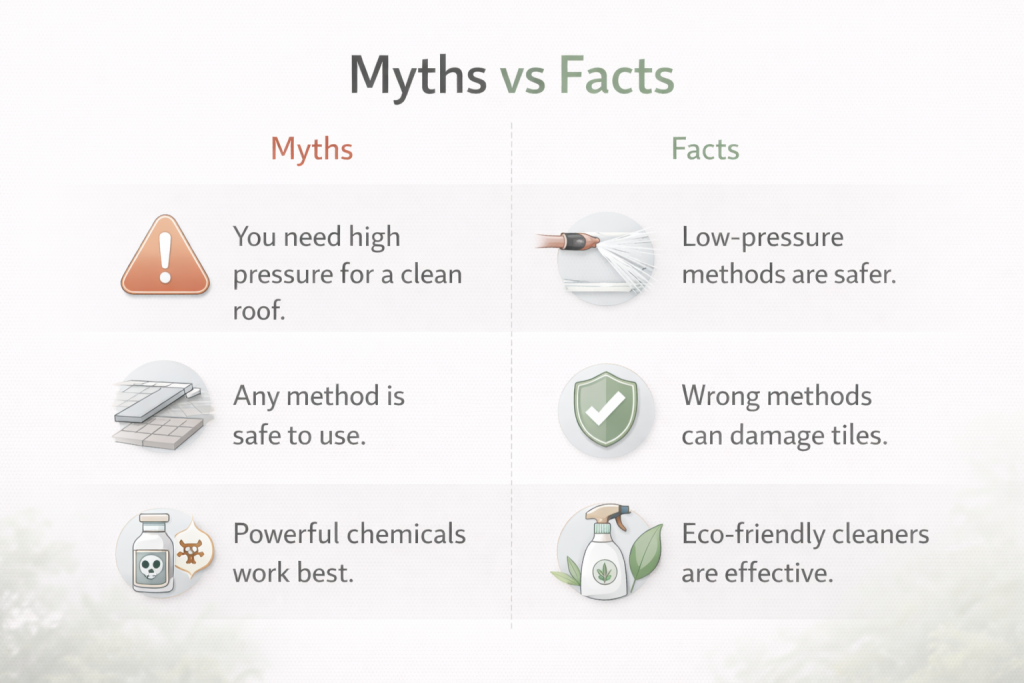
- Roof cleaning doesn’t inherently damage shingles or tiles—improper methods do
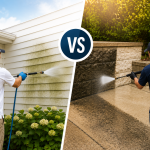
- High-pressure washing is the biggest risk if not handled correctly
- The right method depends on your roof’s material, age, and condition
- Professional cleaning can actually extend your roof’s lifespan
What Actually Causes Roof Damage During Cleaning?
Let’s clear the confusion first.
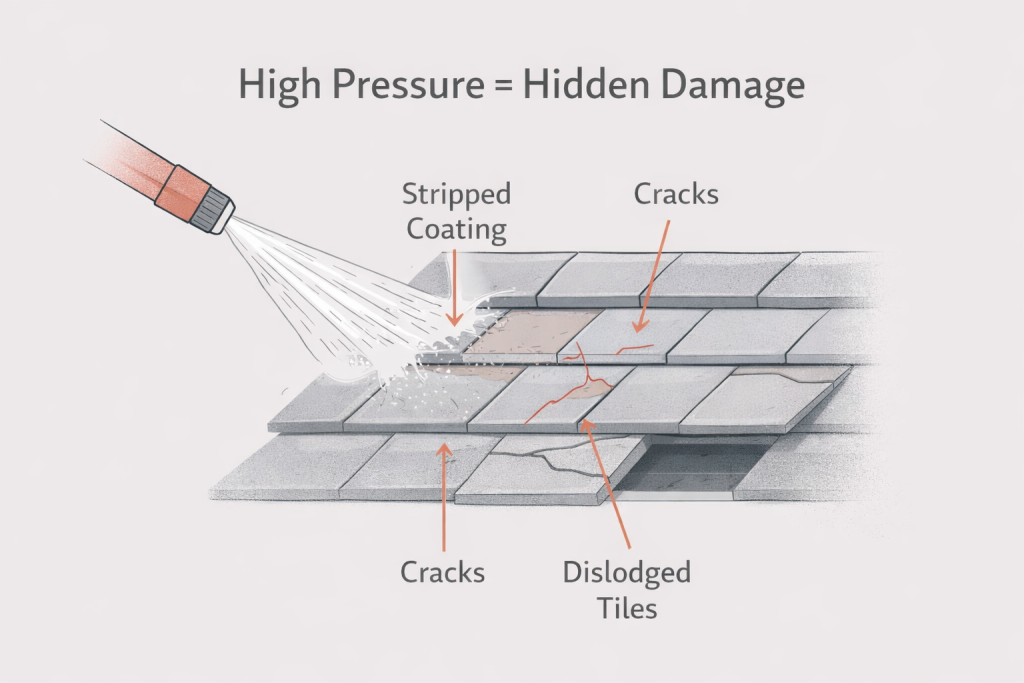
Roof cleaning damages shingles or tiles when excessive force, wrong chemicals, or poor technique are used.
That’s it. Not the cleaning itself—the execution.
You’ve probably seen those satisfying videos where dirt blasts off instantly.
What you don’t see? The subtle damage that can happen underneath—stripped coatings, loosened tiles, or small cracks that worsen over time.
So… Should You Clean Your Roof at All?
Here’s the part most people overlook.
A dirty roof isn’t just cosmetic.
Moss and algae trap moisture. Over time, that moisture can:
- weaken tiles
- cause cracking (especially in freeze-thaw cycles)
- block gutters, leading to damp issues
Cleaning—when done correctly—is actually preventative maintenance.
It’s like servicing your car. You’re not damaging it—you’re protecting it.
The 3 Main Roof Cleaning Methods (And Their Risk Levels)
| Method | When it helps most | A simple cue | Common mistake |
|---|---|---|---|
| Pressure Washing (low pressure) | Heavy moss & debris | Fast, visible results | Using high pressure instead of controlled flow |
| Soft Washing | Algae, stains, long-term prevention | Chemical treatment | Ignoring environmental impact |
| Manual Scraping | Targeted areas or delicate roofs | Precise cleaning | Scraping too aggressively |
What’s the Safest Way to Clean a Roof?
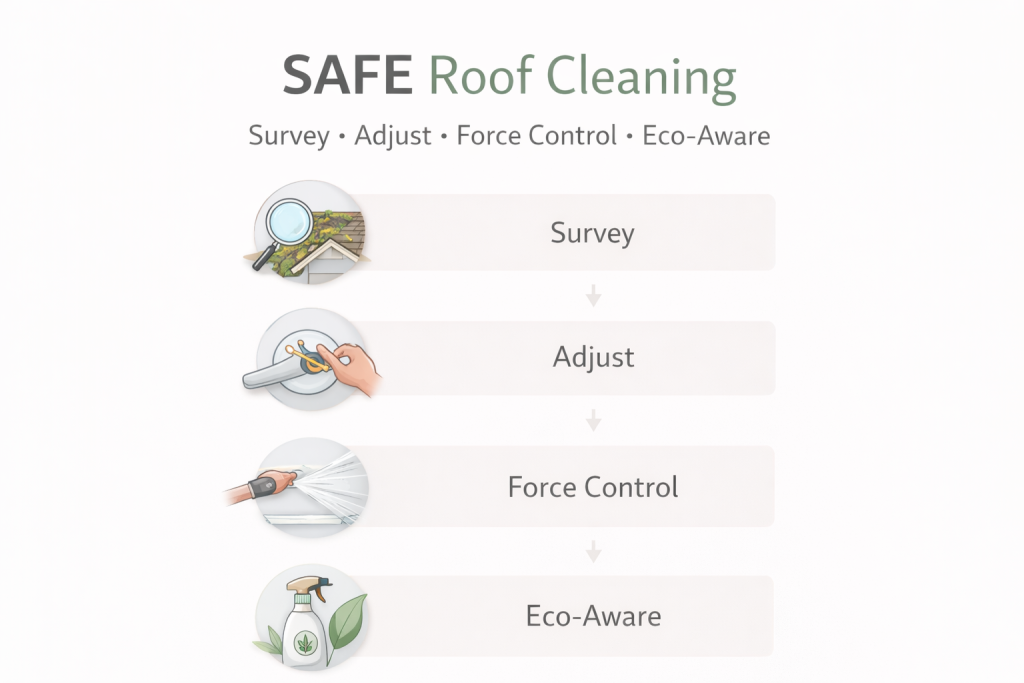
Here’s a simple framework you can use before hiring anyone:
The “SAFE” Method
- Survey first – roof condition matters more than dirt level
- Adjust method – no one-size-fits-all approach
- Force control – pressure should always be minimal
- Eco-awareness – chemicals must be controlled and safe
This framework keeps you focused on what really matters: long-term roof health, not just short-term appearance.
What Most Homeowners Get Wrong
Let’s be honest—most damage happens because of these mistakes:
Do This, Not That
- ✔️ Use trained professionals
- ❌ Don’t hire based on lowest price
- ✔️ Ask about pressure levels
- ❌ Don’t assume all pressure washing is the same
- ✔️ Consider roof age and material
- ❌ Don’t treat all roofs equally
These small decisions often determine whether your roof stays protected—or slowly deteriorates.
A Familiar Scenario Most People Recognize
They arrive, set up a high-pressure washer, and within hours your roof looks spotless.
A few months later?
You notice:
- loose tiles
- faster moss regrowth
- subtle leaks
Nothing dramatic—but enough to cost you later.
This is the difference between cleaning for appearance and cleaning for longevity.
A Perspective Worth Remembering
As Warren Buffett once said:
“Price is what you pay. Value is what you get.”
That couldn’t be more true here.
Cheap cleaning might save money today—but cost far more tomorrow.
Final Verdict: Does Cleaning Damage Roof Shingles or Tiles?
No—cleaning your roof does not damage shingles or tiles when done correctly.
But yes—it absolutely can if the wrong method, pressure, or technique is used.
The real question isn’t “Should you clean your roof?”
It’s “How should it be cleaned?”
Choose the right method. Ask the right questions.
And when in doubt—go with experience over shortcuts.
Audio Summary (Separate Voice Version)
If you’re wondering whether roof cleaning damages shingles or tiles, the answer depends on how it’s done. The wrong method—especially high pressure—can cause real damage. But when done properly, cleaning actually protects your roof and extends its lifespan. The key is choosing the right approach for your specific roof.
FAQs
1. What makes a good operational finance approach in service businesses?
A good approach balances cost control with long-term asset protection—like choosing the right roof cleaning method instead of the cheapest option.
2. When to hire a professional for roof cleaning?
If your roof has heavy moss, stains, or you’re unsure about safe pressure levels, it’s best to hire a professional.
3. Best practices for roof cleaning?
Use low pressure, inspect the roof first, and match the cleaning method to the material.
4. How to avoid damage during roof cleaning?
Avoid high-pressure washing, use the right tools, and ensure the process is tailored to your roof type.
5. What services should be included in professional roof cleaning?
Inspection, cleaning, debris removal, and recommendations to prevent regrowth.
6. Custom roof cleaning solutions—are they necessary?
Yes, because every roof differs in material, age, and exposure to weather conditions.
7. What defines professional roof cleaning?
Proper training, controlled techniques, and method selection based on roof condition—not speed.
8. Best method for cleaning roof tiles?
Soft washing or controlled low-pressure cleaning, depending on the level of buildup.
9. Cost considerations for roof cleaning?
Lower-cost services may cut corners, increasing the risk of damage and future repair costs.
10. How does SO ensure safe roof cleaning?
SO focuses on tailored methods, controlled pressure, and careful assessment to protect your roof while improving its condition.