Most homeowners don’t ignore their home on purpose. Life gets busy. Weekends disappear. And exterior cleaning quietly slips down the priority list.
At first, it doesn’t seem like a big deal. The gutters can wait. The siding isn’t that dirty. The driveway still works. But over time, these small delays start stacking into something bigger… something more expensive.
Exterior maintenance is not only about resale. According to the National Association of Realtors, 68% of homeowners said they had a greater desire to be in their home after completing outdoor projects, and 60% said they enjoyed their home more.
That tells you something important. The outside of your home doesn’t just affect how it looks, it affects how it feels to live in it.
That’s where exterior home cleaning becomes more than a maintenance task. It becomes a way to control what builds up around your home and what it turns into over time.
The real frustration? Most people act too late. Not because they didn’t care, but because the problem didn’t feel urgent until it was.
So if nothing seems wrong today, does that mean everything is fine, or just not visible yet?
Key Takeaways
- Exterior neglect usually starts as a visual problem and becomes a maintenance problem.
- Moisture, algae, debris, and grime do more damage when they are given time.
- The safest cleaning method depends on the surface, not the stain alone.
- Routine care is usually cheaper and easier than catch-up cleaning.
Why Do Homeowners Wait Too Long To Clean The Outside Of The House?
Because the damage rarely feels urgent at first.
A stained walkway does not leak. A dirty gutter does not always overflow on the first storm. Algae on the roof can look like a color issue, not a care issue. That delay is exactly what makes the problem grow. Great Lakes Works describes exterior cleaning as a way to preserve curb appeal, longevity, and property value, while also removing dirt, grime, mold, mildew, and stains from multiple surfaces.
There is also a mindset problem. Many people think of exterior house cleaning as “optional polishing.” In reality, it is often basic prevention.
“An ounce of prevention is worth a pound of cure.” — Benjamin Franklin
That line has probably never felt more at home than it does here.
What Happens First When A Home Exterior Is It ignored?
The first changes are usually visual, but they do not stay visual for long.
Here is the short answer: when a home’s exterior is never cleaned, dirt and organic buildup begin holding moisture, drainage gets less reliable, surfaces stain more deeply, and the property starts aging faster than it should.
That process often shows up in this order:
- Curb Appeal Slips
The house starts looking dull, streaked, or tired. Sellers feel this first because listing photos do not forgive grime. - Drainage Problems Appear
Gutters collect debris, overflow becomes more likely, and splash-back leaves marks on siding and trim. - Organic Growth Spreads
Algae, mildew, and moss settle into shaded or damp areas and become harder to remove. - Surface Wear Speeds Up
Decks, concrete, painted surfaces, and rooflines start looking older than they are.
Great Lakes Works lists these same trouble points in practical terms. Their exterior cleaning service covers siding, roofs, decks, patios, driveways, fences, gutters, and windows, and says regular cleaning helps prevent damage, extend surface life, improve safety, and support property value.
Exterior Home Cleaning Is Really A Moisture-Control Job
This is the piece many homeowners miss.
A dirty exterior is not only “dirty.” Buildup changes how water behaves. Leaves hold moisture in gutters. Film and residue stay damp on siding. Organic growth thrives in shade. Patios and steps become slicker after rain. In other words, the problem is not just appearance. It is lingering moisture in the wrong places.
That matters even more in humid, wooded, lakeside, or coastal environments. Warm, damp conditions give algae and related discoloration an easier runway. The Asphalt Roofing Manufacturers Association notes that algae discoloration is especially common in warm, humid conditions and warns that power washing can damage asphalt roofing.
A homeowner may think, “It still looks manageable.” The house may be thinking otherwise.
Which Parts Of The Property Usually Show Trouble First?
Some surfaces wave the white flag earlier than others.
Roof
Dark streaks, patchy discoloration, and mossy areas tend to stand out first. Roof cleaning needs real restraint. ARMA explicitly says not to use a power washer or brush on algae-covered asphalt roofing because high-pressure washing can damage it.
Gutters
Gutters are easy to ignore until rain exposes the problem. Overflow, edge drips, and wet marks down the siding are common clues. Great Lakes Works says gutter cleaning helps prevent water damage and blockages.
Siding
Siding collects grime slowly, especially on shaded walls. What looks like harmless discoloration can become a mix of dirt, mildew, and residue that dulls the whole home.
Driveways, Walks, And Patios
Concrete hides neglect for a while, then suddenly looks permanently older. Dark traffic lanes, slippery patches, and stubborn stains are common signs.
Decks And Fences
Wood and painted outdoor surfaces are where homeowners often learn the hard way that more pressure is not always better.
A Simple Way To Think About The Problem
The smartest way to approach residential exterior cleaning is this:
Surface + buildup + method
If even one of those is mismatched, the job can go sideways.
| Surface | Common buildup | Better approach | Common mistake |
| Asphalt roof | Algae, dark streaks | Gentle, surface-safe treatment | Treating it like concrete |
| Gutters | Leaves, sludge, debris | Clearing and flushing | Waiting until overflow starts |
| Vinyl or painted siding | Dirt, mildew, film | Soft washing method | Using too much pressure |
| Concrete driveway | Oil, grime, algae | Pressure washing where appropriate | Assuming every stain lifts equally |
| Deck or fence | Dirt, weathering, mildew | Material-specific cleaning | Blasting away finish or fibers |
That is why good exterior property cleaning is not about bringing the most force. It is about using the right force in the right place.
What Cleaning Method Is Safest For Each Area?
This is where many DIY jobs go off the rails.
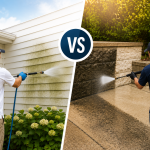
Great Lakes Works explains the difference clearly: pressure washing is used for hard surfaces like concrete, brick, and stone, while soft washing is a lower-pressure method meant for surfaces like siding, roofs, and wood that can be damaged by higher pressure. They also mention biodegradable cleaning products and custom cleaning plans.
That distinction matters because “clean” and “undamaged” are not the same thing.
A homeowner shopping for outdoor house cleaning services should not just ask, “Can they remove this stain?” A better question is, “How will they remove it without shortening the life of the surface?”
That is also where trust signals matter. Organizations like the Pressure Washing Resource Association, the International Janitorial Cleaning Services Association, OSHA, and the EPA are the kind of references that make a company sound grounded in method and safety, not just marketing. EPA’s Safer Choice program, for example, says its label helps identify cleaning products with safer chemical ingredients without sacrificing performance.
What Should A Homeowner Do Before The House Starts Looking Worn Out?
A simple routine beats a dramatic rescue every time.
Here is a practical five-step checklist:
- Walk The Exterior After A Storm
Watch where water runs, pools, or splashes back. - Look At The Shaded Sides Of The Home
That is where algae, mildew, and grime often show up first. - Check The Gutters Before They Clog Solid
It is easier to remove debris than recover from overflow damage. - Test Walking Surfaces After Rain
Slippery concrete and patios deserve attention early. - Choose The Method Before Choosing The Machine
The safest fix depends on the material.
That is the difference between routine home exterior washing and expensive catch-up work.
What Do Most People Get Wrong About Exterior Cleaning?
They assume one of two things.
Either they think the problem is only cosmetic, or they think every problem can be solved by blasting it with more pressure. Both ideas cost people money.
Do This, Not That
- Do this: clean before buildup gets stubborn
Not that: wait until every surface looks obviously dirty - Do this: match the method to the material
Not that: use the same pressure on roof, siding, and concrete - Do this: pay attention to drainage and slip risk
Not that: focus only on what looks bad from the street - Do this: use surface-safe products where possible
Not that: assume harsher chemistry is always better
There is a reason pros talk so much about process. Exterior cleaning done badly can solve one problem and create another.
A Familiar Homeowner Scenario
A homeowner buys a great place and starts strong. The lawn is trimmed. The entry looks sharp. The first year goes by fast.
Then weekends get busy. Leaves sit in the gutters a little too long. The north side of the house begins to pick up a faint green cast. The driveway darkens. The patio starts feeling slick after rain. Nothing seems like an emergency, so nothing gets booked.
Months later, the owner is no longer dealing with one small cleaning task. It is now a stained roofline, messy gutters, tired siding, dark concrete, and the nagging feeling that the whole property looks less cared for than it really is.
That is the trap. Neglect stacks quietly, then shows up all at once.
When Hiring A Professional Makes The Most Sense
Some jobs are simple. Some are not worth guessing at.
Professional outside house cleaning usually makes more sense when:
- Multiple surfaces need different treatment
- Second-story work or roof work is involved
- Gutters are hard to reach
- Algae or mildew keeps returning
- The property is being prepared for sale, guests, or seasonal upkeep
- The owner wants the job done without gambling on the wrong pressure or product
That last point matters. Not all surfaces are safe for high-pressure washing. Professional assessment can prevent avoidable damage. Routine maintenance helps prevent repair bills, but it does not replace structural repairs that already need to happen. Great Lakes Works positions its exterior cleaning service around that kind of surface-specific approach, offering pressure washing, soft washing, roof cleaning, gutter cleaning, driveway cleaning, window cleaning, and other exterior maintenance solutions in Norton Shores.
Final Thought
A dirty exterior is easy to dismiss because it changes gradually.
But what looks like “just buildup” often becomes trapped moisture, poor drainage, slick footing, stained surfaces, and avoidable wear. That is why exterior home cleaning belongs in the same category as all the other smart maintenance habits people swear they will never skip again.
For homeowners who would rather stay ahead of the mess than chase it later, Great Lakes Works LLC offers exterior cleaning services in Norton Shores, including house and building washing, roof cleaning, deck and patio cleaning, driveway and sidewalk cleaning, fence cleaning, gutter cleaning, and window cleaning. Contact them at (231) 740-7059 or [email protected].
FAQ
How Often Should A Homeowner Clean The Exterior Of The House?
That depends on trees, shade, humidity, and surface type, but most homes benefit from regular inspections and cleaning before buildup becomes obvious.
What Is The Best Way To Clean Exterior Siding?
It depends on the material and the type of residue. Soft washing is often a safer choice for siding than aggressive pressure.
Is Pressure Washing Always The Right Answer?
No. Hard surfaces like concrete may handle it well, but roofs, painted siding, and some wood surfaces often need gentler methods.
What Are The Best Cleaners For House Siding?
The best cleaner is the one that matches the siding material and the buildup. Surface-safe products and the right method matter more than brute strength.
When Should A Homeowner Hire Pressure Washing Company Help?
Usually when the property has multiple surfaces, hard-to-reach areas, recurring algae or mildew, or visible buildup that needs a method-based plan.
What Helps Top-Rated Exterior Cleaning Services Stand Out?
A good company explains why one method fits one surface and not another. Clear expectations and surface-specific care usually separate good work from rushed work.
Does Great Lakes Works Handle Both Pressure Washing And Soft Washing?
Yes. Their exterior cleaning page says they use pressure washing for hard surfaces and soft washing for more delicate materials like siding, roofs, and wood.
What Should Customers Know Before Booking With Great Lakes Works?
The main thing is that the safest cleaning plan depends on the property. Surface condition, material type, and the local environment all affect how the work should be done.