Your home’s exterior is exposed to the elements every single day. Rain, wind, dust, sunlight, pollution, and organic growth gradually settle onto siding, brick, stucco, and trim. At first, the changes are subtle. Colors look slightly dull. Small dark streaks appear. Green patches form in shaded corners. Over time, however, these minor issues become noticeable and harder to remove.
House Washing Services, also known as exterior house cleaning, residential pressure washing, or home exterior washing, address these problems at their source. This guide explains how house washing works, why it matters, and how it protects your property long term.
What Is House Washing?
House washing is the process of cleaning the exterior surfaces of a home to remove dirt, mold, mildew, algae, dust, and environmental pollutants. Unlike simple rinsing with a garden hose, professional exterior washing uses appropriate cleaning solutions and controlled pressure to clean thoroughly without damaging surfaces.
It is not just about improving appearance. Proper residential exterior cleaning helps preserve building materials and prevent premature deterioration.
Why Exterior Surfaces Accumulate Buildup
Understanding the cause of the buildup helps clarify why regular washing is necessary.
Moisture plays a major role. Rainwater carries airborne dirt onto siding. Shaded areas remain damp longer, encouraging algae and mildew growth. Wind deposits dust and pollen. In urban or high-traffic areas, pollutants stick to surfaces and create dull, gray films.
Sunlight contributes as well. UV exposure breaks down finishes and makes surfaces more vulnerable to staining. When organic growth attaches to siding, it can slowly weaken protective coatings.
Without periodic home pressure washing, these elements combine to reduce curb appeal and shorten the lifespan of exterior materials.
Common Problems House Washing Services Solve
Exterior house cleaning addresses several practical concerns:
- Dark streaks on siding are often caused by algae growth. Washing removes these streaks and restores uniform color.
- Green patches in shaded areas indicate mildew or mold. Proper treatment eliminates growth and reduces regrowth risk.
- Dust and pollution create a faded appearance. Cleaning removes the film that masks the original finish.
- Spider webs, insect residue, and bird droppings accumulate in corners and under eaves. Thorough washing clears these areas safely.
- By targeting these issues, house washing services improve both appearance and material protection.
The Difference Between Pressure Washing and Soft Washing
Not all surfaces require the same cleaning intensity. This is where technique matters.
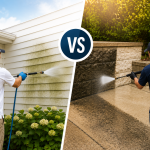
Pressure washing uses higher water pressure and is suitable for durable surfaces like concrete driveways or brick.
Soft washing uses lower pressure combined with specialized cleaning solutions. It is ideal for siding, painted surfaces, stucco, and roofing materials.
A balanced approach ensures effective cleaning without damaging siding, loosening trim, or forcing water behind panels.
Areas Typically Included in Exterior House Cleaning
A comprehensive house washing process may cover:
- Siding (vinyl, wood, brick, stucco, or composite)
- Fascia and soffits
- Window frames and shutters
- Exterior doors
- Garage doors
- Porch columns and trim
Some services may also extend to attached structures like carports or covered patios.
The goal is consistent cleanliness across all visible exterior surfaces.
Benefits of Regular House Washing
Routine exterior house cleaning services provide both immediate and long-term advantages.
Improved Curb Appeal
A clean exterior significantly enhances the overall look of a property.
Extended Surface Lifespan
Removing harmful growth prevents gradual surface breakdown.
Prevention of Costly Repairs
Mildew and moisture trapped against siding can lead to rot or structural damage over time.
Healthier Living Environment
Reducing mold and algae around entry points contributes to a cleaner surrounding environment.
Better Preparation for Painting
If repainting is planned, cleaning ensures better adhesion and longer-lasting results.
Preventive cleaning is more cost-effective than restoration after damage occurs.
Maintained vs. Neglected Exterior Surfaces
| Aspect | Regularly Washed Home |
Neglected Exterior |
| Appearance | Bright and uniform color | Dull, stained, patchy |
| Mold & Algae | Controlled and minimal | Visible growth and spread |
| Paint Condition | Preserved longer | Peeling or fading sooner |
| Surface Integrity | Protected from buildup | Gradual material breakdown |
| Maintenance Costs | Predictable upkeep | Potential repair expenses |
Consistent home exterior washing reduces the risk of structural deterioration.
How Often Should House Washing Be Done?
Frequency depends on environmental conditions.
Homes in humid climates may require washing more frequently due to algae growth. Properties near busy roads may accumulate dust faster. Tree-covered areas often experience increased mildew and pollen buildup.
For many homes, washing once per year maintains appearance and surface health. In higher-moisture environments, twice yearly cleaning may be beneficial.
Regular inspection helps determine appropriate timing.
Situations Where House Washing Becomes Especially Important
Certain conditions make exterior cleaning more urgent.
If siding appears noticeably darker than its original color, buildup is likely significant.
If green or black streaks continue spreading, organic growth may be expanding.
If preparing to sell a property, exterior cleaning improves first impressions.
If planning exterior painting, washing is essential beforehand.
Addressing buildup early requires less effort than removing heavy accumulation later.
FAQs
- Is house washing safe for all siding types?
Yes, when the correct cleaning method is used. Soft washing is typically recommended for delicate surfaces, while higher pressure is reserved for durable materials.
- How long does exterior house cleaning take?
The time required depends on the size of the home, level of buildup, and surface type. Larger homes or heavily soiled surfaces require more time.
- Can house washing remove mold completely?
Exterior washing removes visible mold and treats affected areas. However, environmental conditions may cause regrowth over time, which is why periodic cleaning is helpful.
- Does house washing damage paint?
When performed correctly using appropriate pressure levels, house washing does not damage properly adhered paint. In fact, it helps preserve painted surfaces.
- Is house washing only for cosmetic improvement?
No. While it enhances appearance, it also protects materials from moisture damage, mold growth, and premature deterioration.
Final Insight
House Washing Services provide more than surface-level improvement. Whether described as exterior house cleaning, residential pressure washing, or home exterior washing, the purpose remains consistent: protect and maintain your home’s outer structure.
By removing accumulated dirt, mold, and environmental residue, house washing supports long-term durability and visual appeal. Regular maintenance helps your home withstand changing weather conditions while preserving its structural integrity.
A clean exterior is not just about presentation it is about protection, prevention, and responsible home care.