You’ve probably stepped onto your deck after winter and thought, “When did it start looking this dull?” The wood feels rough under your feet, stains appear uneven, and no matter how much you scrub it just doesn’t come back to life the way you expected.
Here’s the truth most homeowners overlook: no finish, stain, or sealer will last on a dirty surface. If the base isn’t properly cleaned, everything you apply on top becomes temporary and often uneven.
Pressure washing, when done correctly, isn’t just about cleaning. It’s the foundation of a longer-lasting, better-looking deck. Done wrong, it can damage the wood. Done right, it can restore it.

Key Takeaways
- Pressure washing removes dirt, mold, and old finishes effectively
- Technique matters more than pressure strength
- Always follow the wood grain to avoid damage
- Let the deck dry at least 24 hours before sealing
Why Pressure Washing a Deck Matters More Than You Think
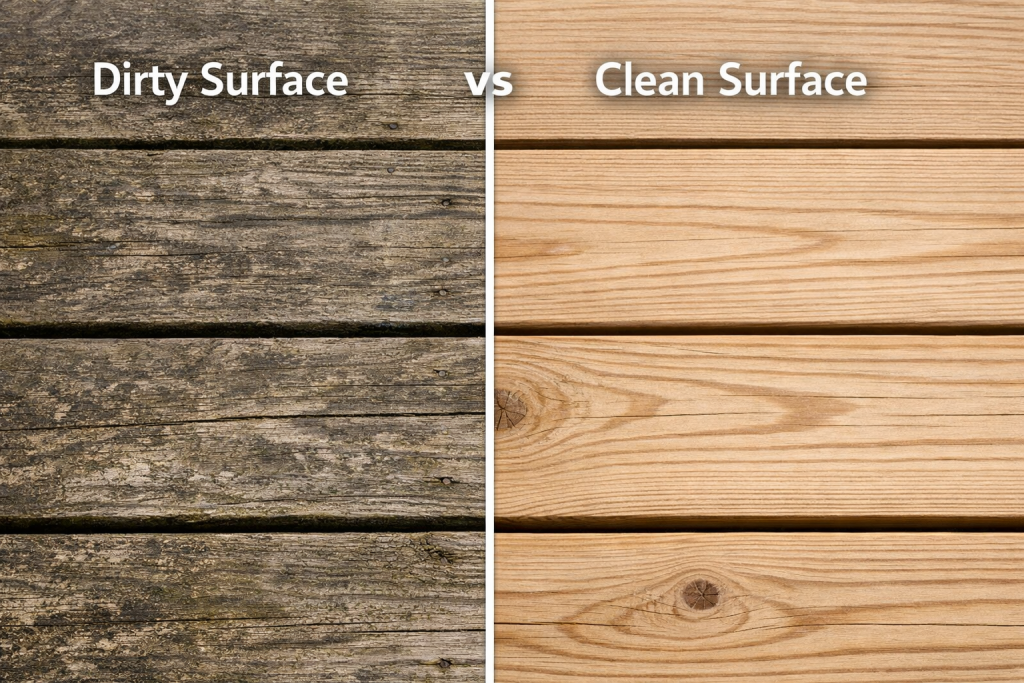
At first glance, your deck might just look “aged.” But what you’re often seeing isn’t permanent wear—it’s buildup.
Over time, your deck collects:
- Dirt and debris
- Mold and mildew
- Old stain layers that no longer bond properly
These don’t just sit on the surface they settle into the wood pores. When you apply a new finish over that, it struggles to adhere properly. The result? Peeling, fading, or patchy results much sooner than expected.
Pressure washing solves this by:
- Lifting deep-set grime
- Removing discoloration
- Opening the wood pores so new stain can penetrate properly
Think of it like preparing a wall before painting. Skip the prep, and the final result always shows it.
What Is Pressure Washing in Deck Care?
Pressure washing is the use of controlled, high-pressure water to clean surfaces. In deck care, it’s used to remove dirt, mildew, loose finishes, and contaminants from wood.
But here’s what makes it different from just “spraying water”:
It’s controlled.
It’s methodical.
And most importantly it respects the material you’re working on.
How To Properly Pressure Wash A Deck (Step-by-Step)
This is where most people make mistakes. It’s easy to assume that more pressure equals better cleaning but that’s exactly what leads to damage.
A better approach focuses on technique.
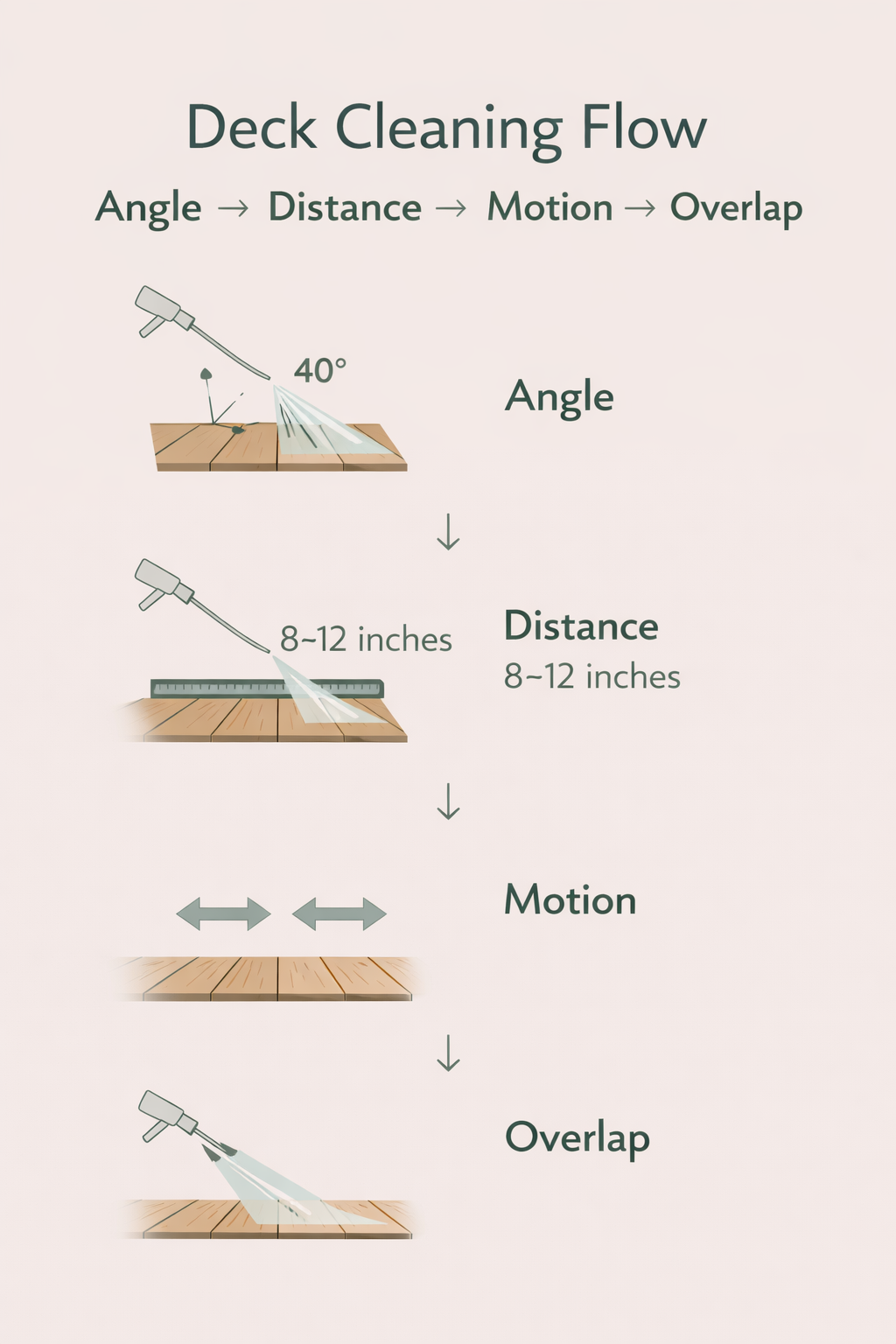
- Start with a Low-Angle Spray
Instead of pointing the nozzle straight down, angle it slightly. This helps lift dirt without digging into the wood surface.
- Maintain Distance (8–12 Inches)
Too close, and you risk cutting into the wood fibers. Too far, and you lose effectiveness. Aim for a consistent, moderate distance about the length of your forearm.
- Work in Sections (Two Boards at a Time)
Cleaning small sections helps maintain consistency. It also prevents you from missing spots or over-cleaning certain areas.
- Move With the Grain
Wood has a natural direction. Always follow it. Spraying against the grain can cause splintering or visible damage.
- Keep the Nozzle Moving
This is one of the most important rules. If you pause in one spot, even for a second, you can create marks or uneven patches.
- Overlap Each Pass Slightly
Each new pass should overlap the previous one just a bit. This ensures even cleaning and prevents streaks.
- Finish Each Section Cleanly
If you need to stop midway, don’t just release the trigger. Sweep the nozzle away from the deck first. This prevents sudden pressure marks.
Common Mistakes That Damage Your Deck
Even with the right equipment, small mistakes can lead to visible damage.
Do this, not that:
- Use steady, controlled motion → Don’t hold spray in one spot
- Follow the grain → Don’t spray against it
- Keep a safe distance → Don’t blast too close
- Overlap passes → Don’t leave visible gaps
- Work consistently → Don’t clean in random patches
A lot of damage doesn’t come from pressure it comes from inconsistency.
Quick Reference Table
| Step | Why It Matters | Simple Cue | Common Mistake |
| Spray angle | Prevents surface damage | Slight tilt | Direct downward spray |
| Distance | Protects wood fibers | Arm’s length | Too close blasting |
| Motion | Ensures even cleaning | Keep moving | Pausing in one spot |
| Overlap | Avoids streaks | Slight overlap | Patchy finish |
A Real-World Scenario You’ll Recognize
Imagine starting early, cleaning half your deck in one go. It looks great. Then something interrupts you you stop, come back later, and continue.
Once everything dries, you notice it immediately.
One side looks brighter. The other looks dull.
That’s not a staining issue. It’s not even the wood.
It’s inconsistent cleaning.
Pressure washing rewards consistency. The more even your process, the more professional your final result will look.
What Most People Get Wrong About Deck Cleaning
“Quality is never an accident; it is always the result of intelligent effort.” John Ruskin
Most people assume pressure washing is about power stronger machine, better result.
But in reality, it’s about:
- Control
- Technique
- Patience
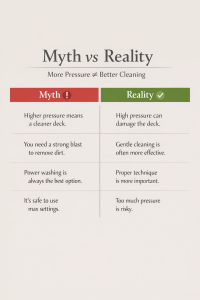
Using too much pressure can actually shorten your deck’s lifespan by damaging the surface layer of the wood.
The goal isn’t to force dirt out it’s to gently remove it while preserving the structure underneath.
What Happens After Cleaning?
Once your deck is fully cleaned, the job isn’t finished yet.
What you do next determines how long your results last.
Follow these steps:
- Allow the deck to dry for at least 24 hours
- Check for any rough or raised fibers
- Lightly sand if needed
- Apply a high-quality stain or sealant
Drying is especially important. If moisture remains in the wood, it can prevent proper absorption of the finish.
This final step locks in your effort and protects the deck from future weather damage.
Conclusion
Properly pressure washing a deck isn’t complicated but it does require attention to detail. The difference between a clean, long-lasting finish and a patchy, short-lived one often comes down to how well you prepare the surface.
When done right, pressure washing removes years of buildup, restores the natural look of the wood, and creates the perfect base for sealing or staining.
If you’re planning to refinish your deck, remember this: the final result doesn’t start with the stain it starts with the cleaning.
Take your time, follow the right technique, and your deck won’t just look better—it will last longer.
Pressure washing your deck is the foundation of a long-lasting finish. Focus on technique steady motion, proper distance, and working with the grain. Avoid rushing or using excessive pressure. Once cleaned, let the deck dry fully before sealing. A little patience here makes a big difference in how your deck looks and lasts.
FAQs
What makes a good deck pressure washing result?
A good result comes from consistent technique, even cleaning, and avoiding damage to the wood surface.
Best practices for pressure washing a deck?
Maintain proper distance, follow the wood grain, and keep the nozzle moving at all times.
How to pressure wash without damaging wood?
Use controlled pressure, avoid spraying too close, and never stay in one spot for too long.
When to hire professional deck cleaning services?
If your deck has heavy staining, peeling finishes, or if you’re unsure about proper technique.
What services are included in deck cleaning?
Most services include pressure washing, stain removal, surface prep, and sometimes sealing or refinishing.